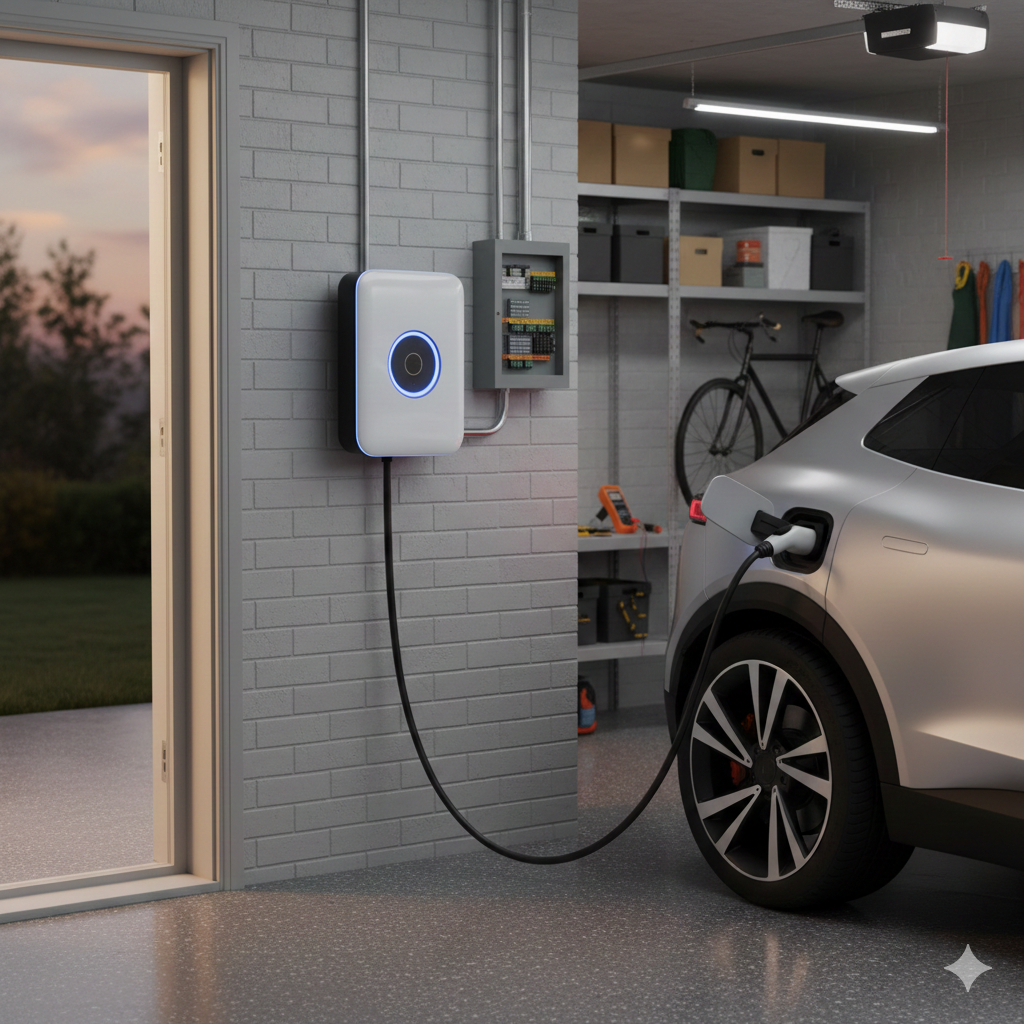
As electric vehicles become increasingly popular across Northern Nevada, more homeowners are discovering the convenience and cost savings of charging at home. While your EV comes with a basic charging cable, installing a dedicated Level 2 home charger dramatically improves charging speed and daily usability. However, proper installation requires careful planning, significant electrical work, and professional expertise to ensure safety, code compliance, and optimal performance.
This comprehensive guide covers everything Reno-area homeowners need to know about home EV charger installation, from understanding the different types of charging equipment to navigating electrical requirements, costs, federal incentives, and the critical importance of professional installation. Whether you're already driving an electric vehicle or planning to purchase one, understanding the installation process will help you make informed decisions and ensure a safe, efficient charging solution for years to come.
Understanding EV Charger Types and Charging Speeds
Not all EV chargers are created equal. Understanding the different charging levels helps you choose the right equipment for your needs and budget.
Level 1 Charging: 120-Volt Standard Outlets
Level 1 charging uses a standard 120-volt household outlet - the same outlet you use for lamps, televisions, and other household devices. Every electric vehicle comes with a Level 1 charging cable (often called a "trickle charger") that plugs directly into any standard three-prong grounded outlet.
The primary advantage of Level 1 charging is simplicity - it requires no special installation or electrical work. You simply plug the charging cable into your vehicle and into a standard outlet. This makes Level 1 charging ideal for emergency situations, travel, or temporary charging solutions.
However, Level 1 charging has significant limitations. Most Level 1 chargers deliver only 1.4 kilowatts of power, which translates to approximately 3-5 miles of range added per hour of charging. To fully charge a depleted EV battery using Level 1 charging typically requires 40-50 hours or more, depending on battery size. For most EV owners driving 30-40 miles per day, overnight Level 1 charging may barely replace the energy used, leaving no buffer for longer trips or variations in driving patterns.
Level 1 charging works adequately for plug-in hybrid vehicles (PHEVs) with smaller batteries, for drivers with very short commutes, or as a backup charging method. For most full electric vehicle owners, however, Level 1 charging proves frustratingly slow and limits the full utility of the vehicle.
Level 2 Charging: 240-Volt Dedicated Circuits
Level 2 charging operates at 240 volts - the same voltage used by electric dryers, ranges, and central air conditioning systems. This higher voltage delivers dramatically faster charging speeds, making it the standard choice for home EV charging installations.
Level 2 chargers typically deliver between 7.2 and 19.2 kilowatts of power, depending on the specific charger rating and your vehicle's onboard charging capability. At these power levels, Level 2 charging adds approximately 20-60 miles of range per hour of charging - roughly 10 times faster than Level 1 charging. Most EVs can be fully charged overnight in 4-8 hours using Level 2 charging, easily replenishing a full day's driving and then some.
The increased charging speed makes an enormous difference in daily usability. With Level 2 charging, you can fully charge your vehicle during off-peak electricity hours, take advantage of time-of-use utility rates, and ensure your vehicle is always ready with a full charge each morning. The faster charging also provides flexibility for unexpected trips and gives you the ability to charge quickly between uses.
Level 2 charging requires professional installation of a dedicated 240-volt circuit and either a hardwired charging unit or a NEMA 14-50 or similar 240-volt outlet. While this represents a significant upfront investment, the improved functionality and convenience make Level 2 charging the recommended choice for virtually all home EV charging installations.
DC Fast Charging: Public Charging Stations
DC fast charging (also called Level 3 charging) represents the fastest charging technology, capable of adding 100-200 miles of range in just 20-30 minutes. However, DC fast charging requires extremely high-power electrical service - typically 480 volts and 100-350 kilowatts - along with industrial-grade equipment costing tens of thousands of dollars.
DC fast charging is exclusively found at public charging stations and is not practical for residential installation. These systems require electrical infrastructure far beyond what residential properties can support, along with ongoing maintenance and specialized equipment. Homeowners should plan for Level 2 charging at home and use public DC fast charging stations for long-distance travel and emergency rapid charging needs.
Electrical Requirements for Level 2 Charger Installation
Installing a Level 2 EV charger involves substantial electrical work to safely deliver the high power levels required. Understanding these requirements helps you plan your installation and budget appropriately.
Dedicated 240-Volt Circuit
Level 2 EV chargers must be installed on a dedicated electrical circuit, meaning no other devices or outlets share that circuit. This dedicated circuit prevents overloading and ensures the charger has consistent power delivery without interference from other electrical loads.
The 240-volt circuit uses two 120-volt hot conductors, a neutral conductor, and a ground conductor. This configuration is identical to what's used for electric dryers and ranges. However, unlike a dryer that you use occasionally, an EV charger may operate for many hours continuously, placing sustained demand on the electrical circuit.
The dedicated circuit runs from a circuit breaker in your main electrical panel, through conduit and wiring, to the location where the charger will be installed. The entire circuit must be properly sized for the charger's power requirements and installed according to National Electrical Code (NEC) standards and local building codes.
Circuit Breaker and Wire Sizing
The circuit breaker and wire sizing depend on the specific charger's power requirements. EV chargers are considered continuous loads under the NEC, meaning they may operate at maximum capacity for three hours or more. For continuous loads, the circuit must be sized at 125% of the maximum current draw.
Most home Level 2 chargers operate at 30, 40, 48, or 60 amps maximum draw. For these chargers, the required circuit breaker sizes are:
- 30-amp charger: Requires 40-amp circuit breaker and 8 AWG copper wire (or 6 AWG aluminum)
- 40-amp charger: Requires 50-amp circuit breaker and 6 AWG copper wire (or 4 AWG aluminum)
- 48-amp charger: Requires 60-amp circuit breaker and 4 AWG copper wire (or 2 AWG aluminum)
- 60-amp charger: Requires 75-amp circuit breaker and 4 AWG copper wire (or 2 AWG aluminum)
These wire sizes assume copper conductors and runs of less than 100 feet. Longer runs may require larger wire to compensate for voltage drop. The wire must also be rated for the installation environment - for instance, wire running through hot attics requires higher temperature ratings.
Professional electricians calculate exact wire sizing based on the specific installation conditions, ambient temperature, conduit fill, and other factors that affect ampacity. Using undersized wire creates serious fire hazards and will fail electrical inspection.
Conduit and Wire Protection
The wiring from your electrical panel to the charger location must be protected by conduit in most installations. The specific conduit requirements depend on whether the wire runs through interior walls, exterior surfaces, garages, or other locations.
Exterior conduit installations typically use rigid metal conduit (RMC), intermediate metal conduit (IMC), or PVC conduit rated for outdoor use. The conduit must be properly secured, sealed against moisture, and installed to prevent physical damage. Conduit running along exterior walls must be positioned to avoid vehicle damage and must meet specific height and clearance requirements.
Interior installations may use metal or PVC conduit, or in some cases, armored cable (MC cable) or non-metallic sheathed cable (Romex) where permitted by code. The installation method depends on local code requirements and the specific characteristics of your installation location.
GFCI and Overcurrent Protection
Modern electrical codes require ground-fault circuit interrupter (GFCI) protection for EV charging circuits in most installations. GFCI protection detects imbalances in electrical current that could indicate dangerous ground faults and immediately shuts off power to prevent electrical shock.
GFCI protection can be provided through a GFCI circuit breaker in the electrical panel or through GFCI protection built into the charging unit itself. Many modern EV chargers include integrated GFCI protection, which is often more cost-effective than installing a GFCI breaker.
The circuit must also include proper overcurrent protection through the circuit breaker, which prevents the circuit from carrying more current than the wire can safely handle. The breaker must be properly rated for the wire size and charger specifications.
Choosing the Right EV Charger for Your Home
With dozens of Level 2 chargers available on the market, choosing the right one requires consideration of several important factors.
Amperage and Charging Speed
The charger's amperage rating directly determines charging speed. Common residential Level 2 chargers are available in 16, 24, 30, 40, 48, and 60-amp configurations. However, your actual charging speed is limited by whichever is lower: your charger's rating or your vehicle's onboard charger capacity.
Most electric vehicles have onboard chargers rated for 7.2-11.5 kilowatts (30-48 amps at 240 volts). Some newer EVs accept up to 19.2 kilowatts (80 amps), though these higher rates are less common. Check your vehicle's specifications to determine its maximum AC charging rate.
For most homeowners, a 40-48 amp charger provides an excellent balance of charging speed, electrical requirements, and cost. These chargers can deliver 9.6-11.5 kilowatts, which translates to 35-45 miles of range added per hour of charging - more than sufficient to fully charge most EVs overnight.
Higher amperage chargers (60-80 amps) cost more both for the equipment and for the electrical installation due to the heavier wire and larger circuit breakers required. Unless your vehicle can accept these higher charging rates and you frequently need maximum charging speed, the additional cost often provides little practical benefit.
Hardwired vs. Plug-In Installation
Level 2 chargers come in two installation configurations: hardwired units that connect directly to your electrical circuit, and plug-in units that connect to a dedicated 240-volt outlet (typically NEMA 14-50, similar to an RV outlet).
Hardwired installations permanently connect the charger to the electrical circuit with no outlet or plug. This configuration is slightly more efficient, eliminates a potential failure point, and allows for cleaner installation aesthetics. Hardwired chargers also satisfy some local codes that restrict the use of outlets for EV charging. However, hardwired installations are less flexible - if you want to upgrade your charger or move it to a different location, you'll need electrical work to remove and replace it.
Plug-in installations use a dedicated outlet, most commonly a NEMA 14-50 receptacle. This configuration provides flexibility to easily replace or upgrade the charger, take it with you if you move, or even use the outlet for other 240-volt equipment when needed. However, the outlet and plug represent additional components that can potentially fail or become damaged, and some jurisdictions restrict or prohibit the use of outlets for EV charging due to the high continuous loads.
Your electrician can advise on which configuration best suits your specific situation, local code requirements, and future plans.
Smart Features and Connectivity
Modern EV chargers often include "smart" features such as WiFi connectivity, smartphone apps, scheduling capabilities, energy monitoring, and integration with home automation systems. These features can be valuable but also add to the charger's cost.
Smart chargers allow you to schedule charging during off-peak hours to take advantage of lower electricity rates, monitor energy consumption to understand charging costs, receive notifications when charging completes, and remotely stop or start charging sessions. Some integrate with home energy management systems to optimize charging based on solar production, grid demand, or dynamic electricity pricing.
For many homeowners, basic smart features like scheduling and energy monitoring provide significant value, especially in areas with time-of-use electricity rates. More advanced features may be valuable if you have solar panels, home battery storage, or specific energy management goals.
However, basic "dumb" chargers without connectivity features work perfectly well and cost significantly less. They simply charge your vehicle when you plug it in, without monitoring, scheduling, or remote control. Many EVs include scheduling features in the vehicle itself, which can partly compensate for a basic charger.
Indoor vs. Outdoor Installation
Consider where you'll install your charger - inside your garage or outside near your parking area. Outdoor chargers must be rated for outdoor use with appropriate NEMA enclosure ratings (typically NEMA 3R or NEMA 4) to protect against rain, snow, sun, and temperature extremes.
Outdoor-rated chargers cost somewhat more than indoor units due to the weatherproof enclosures required. The installation may also cost more due to additional conduit requirements, weatherproof connections, and potentially longer wire runs from the electrical panel.
Indoor garage installations are generally simpler and less expensive, but only work if you consistently park in your garage and your garage has adequate space. Many Nevada homeowners use their garages for storage rather than vehicle parking, making outdoor installation necessary.
Cord Length
EV chargers come with attached cables typically ranging from 12 to 25 feet in length. The right cord length depends on your parking configuration and where the charger can be installed.
Longer cables provide more flexibility in parking position and charger placement, but they cost more and can be cumbersome to manage. Shorter cables reduce cost and cable management issues but require more precise parking and may limit where the charger can be installed.
Consider your specific parking situation, where your vehicle's charging port is located, and where the charger can be mounted to determine the minimum cord length you'll need. Adding a few extra feet provides useful flexibility without excessive cost.
The Professional Installation Process
Professional EV charger installation follows a structured process to ensure safety, code compliance, and optimal performance.
Initial Consultation and Site Assessment
The installation process begins with an electrician visiting your property to assess your electrical system and discuss your needs. During this site assessment, the electrician will examine several critical factors:
Your main electrical panel will be inspected to determine available capacity, identify open breaker spaces, assess the panel's condition and age, and verify proper grounding. The electrician will also evaluate the distance from the panel to the proposed charger location, the best route for running conduit and wiring, and any obstacles that might complicate the installation.
The assessment includes discussing your specific vehicle's charging requirements, your typical driving patterns and charging needs, whether you might add additional EVs in the future, and any preferences for smart features or specific charger models. This consultation ensures the installation will meet your current and future needs.
Load Calculation and Panel Capacity Evaluation
One of the most critical steps in EV charger installation is performing a detailed electrical load calculation. This calculation determines whether your existing electrical service has sufficient capacity to support the new charger along with all your home's other electrical loads.
The electrician will inventory all major electrical loads in your home including heating and cooling systems, kitchen appliances, water heaters, clothes dryers, and other high-draw equipment. Using NEC-approved calculation methods, they'll determine your home's maximum electrical demand and compare it to your service capacity.
Most modern homes have 200-amp electrical service, which typically provides adequate capacity for a Level 2 EV charger even with other major appliances. However, older homes may have only 100-amp service, and some newer large homes may have insufficient capacity despite 200-amp service if they include multiple high-draw systems.
If the load calculation reveals insufficient capacity, several solutions are available. These include upgrading the main electrical service to higher ampacity, installing a load management system that prevents simultaneous operation of multiple high-draw systems, or choosing a lower-amperage charger that fits within available capacity. Your electrician will discuss the most cost-effective solution for your situation.
Permit Application and Approval
EV charger installation requires electrical permits from your local building department. Professional electrical contractors handle all permit applications as part of their service, ensuring all paperwork is properly completed and submitted.
The permit process typically requires submitting detailed installation plans including circuit specifications, wire sizes and routing, charger specifications, and load calculations. The building department reviews these plans to verify code compliance before issuing the permit.
Permit processing times vary by jurisdiction but typically range from a few days to a few weeks. Some Nevada jurisdictions have expedited permit processes specifically for EV charger installations to encourage electric vehicle adoption.
Never skip the permit process to save time or money. Unpermitted electrical work violates building codes, creates safety hazards, voids equipment warranties, invalidates homeowner's insurance coverage, and can complicate home sales. Permits exist to ensure safety and proper installation.
Circuit Installation
With permits approved, the actual installation begins. The electrician will install a new circuit breaker in your main electrical panel, run conduit from the panel to the charger location following the planned route, pull appropriately sized wire through the conduit, and install the charger or outlet at the mounting location.
The installation process varies depending on your home's construction, charger location, and specific circumstances. An installation from a garage-mounted panel to a nearby garage wall might be completed in a few hours. An installation requiring conduit run along exterior walls or underground trenching from a distant panel could take a full day or more.
Professional installations include proper wire terminations using torque screwdrivers to ensure connections are neither too loose nor too tight, proper grounding and bonding of all components, secure mounting of the charger with appropriate hardware, neat routing and securing of conduit and cables, and proper labeling of circuits and equipment.
Testing and Commissioning
Before turning over the installation to you, the electrician will perform comprehensive testing to verify safe and proper operation. This testing includes verifying correct voltage at the charger, checking for proper grounding and polarity, confirming GFCI protection operates correctly, testing the charger with your vehicle to ensure proper communication and charging, and verifying all connections are secure and properly terminated.
Many electricians use specialized testing equipment to measure voltage, current, and resistance, verify proper operation of all safety devices, and check for any installation defects. This thorough testing catches any issues before they can cause problems.
Final Inspection and Approval
After installation and testing, a building inspector will visit to examine the work and verify code compliance. The inspector will check that the installation matches the approved permit plans, all work meets NEC and local code requirements, proper materials and methods were used, and all safety devices function correctly.
Once the installation passes inspection, the inspector issues an approval, and the permit is closed. This approval provides important documentation that the work was completed properly and safely. Keep this documentation with your home records, as it may be valuable for insurance claims, home sales, or future electrical work.
Electrical Panel Capacity Considerations
Understanding your home's electrical capacity is crucial for successful EV charger installation. Inadequate capacity is one of the most common complications in the installation process.
Understanding Electrical Service Ratings
Your home's electrical service is rated by ampacity - the maximum amount of electrical current the system can safely deliver. Common residential service ratings include 100, 150, 200, and 400 amps. You can determine your service rating by looking at the main circuit breaker in your electrical panel or the rating stamped on the meter base outside your home.
Most homes built since the 1990s have 200-amp service, which generally provides adequate capacity for modern electrical demands including EV charging. Homes built from the 1970s through early 1990s often have 100-150 amp service, while many homes built before 1970 may have only 60-100 amp service.
However, the service rating alone doesn't tell the whole story. What matters is how much of that capacity is already being used by your existing electrical loads versus how much remains available for new loads like an EV charger.
Performing Load Calculations
Accurate load calculations determine whether your electrical service can support adding an EV charger. These calculations consider the heating and cooling system capacity, kitchen appliances including range and ovens, water heater specifications, clothes dryer rating, other major appliances, lighting loads, and small appliance circuits.
The NEC provides several approved calculation methods including standard calculations that sum all loads with some diversity factors, optional calculations for dwellings that typically result in lower calculated loads, and specific calculations for homes with all-electric heating or certain other characteristics.
Professional electricians use these approved methods to determine your actual maximum demand. Many homes with 200-amp service have actual maximum demands of 130-160 amps, leaving adequate capacity for a 40-50 amp EV charger. However, homes with electric heating, large square footage, or numerous high-draw appliances may have demands approaching their service capacity.
Service Upgrades When Necessary
If load calculations reveal insufficient capacity, you have several options. The most straightforward solution is upgrading your electrical service to higher ampacity - typically from 100 to 200 amps or from 200 to 400 amps.
Service upgrades involve replacing the main service panel, installing a new meter base if required, potentially upgrading the service entrance cable from the utility connection, and often coordinating with the utility company to disconnect and reconnect service. These upgrades represent significant projects, typically costing $2,500-$6,000 or more depending on the specific requirements.
However, service upgrades provide long-term value beyond EV charging. They increase your home's electrical capacity for future needs, often allow for safer and more modern electrical panels with better protection devices, bring your service up to current code standards, and can increase property value.
Load Management Systems
For situations where service upgrades are impractical or too expensive, load management systems offer an alternative solution. These intelligent systems monitor your home's total electrical load and automatically reduce or pause EV charging when other high-draw appliances operate, ensuring the total load never exceeds your service capacity.
For example, a load management system might detect when your electric dryer starts and automatically reduce the EV charger's output to keep the total load within limits. When the dryer finishes, the charger automatically resumes full power. This management happens automatically without user intervention.
Load management systems work well for many households, particularly when EV charging typically occurs overnight when other electrical demands are low. They cost significantly less than service upgrades while still allowing full-speed Level 2 charging most of the time.
Cost Factors for EV Charger Installation
Understanding the complete cost of EV charger installation helps you budget appropriately and make informed decisions about equipment and installation options.
Charging Equipment Costs
Level 2 EV chargers range from approximately $300 for basic models to $1,200 or more for high-end units with advanced smart features. Most quality chargers from reputable manufacturers cost $500-$800.
Basic chargers without connectivity features cost less but provide the same fundamental charging function. Smart chargers with WiFi, apps, scheduling, and energy monitoring cost more but offer valuable features, particularly in areas with time-of-use electricity rates. The most expensive chargers include advanced features like voice control integration, larger displays, multiple-vehicle management, and sophisticated energy management capabilities.
When comparing charger costs, consider the total value including warranty coverage, reliability and build quality, customer support availability, and the specific features you'll actually use. The cheapest charger isn't always the best value, but expensive premium features you won't use don't improve your experience.
Electrical Installation Costs
Professional installation costs vary widely based on the complexity of your specific installation. Typical installation costs range from $800 to $2,500 for straightforward installations, but can exceed $3,000-$5,000 for complex projects.
Factors affecting installation cost include the distance from your electrical panel to the charger location, whether the installation requires exterior conduit or interior wall routing, the amperage of the circuit being installed, whether trenching or concrete cutting is required, local labor rates and permitting costs, and whether the electrical panel has available capacity and open breaker spaces.
A simple installation - mounting a charger on a garage wall near the electrical panel with a short conduit run - represents the low end of the cost range. An installation requiring 50-100 feet of exterior conduit, trenching for underground wire, or concrete cutting for conduit routing will cost significantly more.
Request detailed written estimates from licensed electrical contractors that specify all work to be performed, materials to be used, permit and inspection costs, and total project cost. Compare estimates carefully, but remember that the lowest bid isn't always the best choice - quality workmanship and reliable contractors provide value beyond initial cost.
Electrical Panel Upgrades
If your electrical panel lacks capacity for an EV charger, upgrade costs add significantly to the total project expense. Panel upgrades or service upgrades typically cost $1,500-$3,000 for basic panel replacement to $3,000-$6,000 for complete service upgrades including utility coordination.
While these upgrades represent substantial additional expense, they provide long-term value and are often necessary eventually regardless of EV charging. If your home needs a service upgrade, combining it with EV charger installation may be more cost-effective than performing the work separately.
Additional Costs to Consider
Beyond equipment and basic installation, consider potential additional costs including concrete pads or mounting surfaces if needed, cable management systems to keep charging cables neat, protective posts or bollards to prevent vehicle damage to the charger, upgraded electrical meters if required by your utility, and potential utility fees for service modifications.
Some utilities charge connection fees or require meter upgrades when electrical service is modified. Check with your local utility to understand any additional requirements or costs.
Federal Tax Credits and Incentives
Federal and sometimes state and local incentives can significantly reduce the net cost of home EV charger installation. Understanding available incentives helps you maximize savings.
Federal Tax Credit for EV Charger Installation
The federal Alternative Fuel Vehicle Refueling Property Credit provides a tax credit for installing EV charging equipment at residential properties. As of 2026, this credit covers 30% of the total installation cost including equipment and labor, up to a maximum credit of $1,000.
For example, if your total installation cost is $2,500 (equipment plus professional installation), you could claim a $750 tax credit (30% of $2,500). If your total cost is $4,000 or more, you would receive the maximum $1,000 credit.
This is a tax credit, not a deduction - it directly reduces your tax liability dollar-for-dollar. However, the credit is non-refundable, meaning it can reduce your tax liability to zero but cannot create a tax refund beyond what you've paid.
To claim the credit, you'll complete IRS Form 8911 when filing your federal tax return for the year in which the charger was installed. Keep all receipts and documentation of the installation costs, equipment purchases, and professional installation services.
Important limitations include that the credit applies only to the tax year in which the charger is placed in service, you must be the homeowner (not a renter), the property must be your primary or secondary residence, and the credit cannot be claimed for a business property.
State and Local Incentives
Some states and local utilities offer additional incentives for home EV charger installation. While Nevada does not currently offer state-level rebates for residential charger installation, utility companies occasionally provide incentive programs.
Check with NV Energy and other local utilities to determine if any current programs offer rebates, reduced installation costs, or special electricity rates for EV charging. These programs change periodically, so verify current offerings when planning your installation.
Maximizing Incentive Benefits
To maximize available incentives, ensure you claim all applicable federal tax credits, investigate utility incentive programs, keep detailed records of all costs, consult with a tax professional about claiming credits correctly, and time your installation to optimize tax benefits.
Professional electrical contractors familiar with EV charger installations can often advise on available incentives and ensure your installation documentation meets requirements for claiming credits and rebates.
Safety Considerations for Home EV Charging
While properly installed EV charging systems are very safe, understanding important safety considerations ensures trouble-free operation.
Electrical Safety
Level 2 EV chargers draw significant electrical current for extended periods, making proper installation critical. Undersized wiring, loose connections, or inadequate circuit protection can lead to overheating, electrical fires, or equipment damage.
Professional installation ensures all components are properly rated for the loads they carry, all connections are correctly tightened to specification, proper overcurrent and ground fault protection is installed, and equipment is correctly grounded and bonded. These factors directly affect safety and reliable operation.
Never attempt to install EV charging circuits yourself unless you are a licensed electrician. The high power levels involved leave no margin for error. Improper installation creates serious fire and shock hazards that can have catastrophic consequences.
Physical Safety
The charger installation location should consider physical safety factors. Mount chargers at appropriate heights to prevent trip hazards from cables, install in locations that protect the charger from vehicle impacts, ensure adequate clearance from flammable materials, provide adequate lighting for nighttime use, and protect outdoor installations from potential vandalism or theft.
Cable management systems help keep charging cables neat and prevent trip hazards when not in use. Some homeowners install protective posts or bollards near their chargers to prevent accidental vehicle damage.
Weather and Environmental Protection
Outdoor charger installations must use equipment rated for outdoor use and properly protected against weather. Ensure the charger has appropriate NEMA ratings for your climate, conduit and electrical boxes are properly sealed against moisture, installations include appropriate drainage to prevent water accumulation, and equipment is protected from direct sun exposure in hot climates.
Northern Nevada's climate includes cold winters, hot summers, occasional snow, and intense sun. Outdoor installations must accommodate these conditions to ensure long-term reliability.
Ongoing Maintenance and Inspection
While EV chargers require minimal maintenance, periodic inspection ensures continued safe operation. Periodically check for signs of overheating including discoloration or burning smells, inspect cables for damage or wear, verify the charger housing remains securely mounted, test GFCI protection periodically, and ensure outdoor installations remain properly sealed against moisture.
If you notice any unusual behavior, sounds, smells, or visible damage, discontinue use immediately and contact a qualified electrician for inspection and repair.
Why Professional Installation Is Essential
While some homeowners might consider DIY EV charger installation to save money, professional installation is not only recommended but essential for safety, compliance, and reliability.
Code Compliance and Permits
EV charger installation must comply with the National Electrical Code, local building codes, and utility requirements. Professional electricians understand these complex requirements and ensure installations meet all applicable standards.
DIY installations frequently violate code requirements, even when the installer believes they've followed all rules. Code violations create safety hazards, fail inspections, void equipment warranties, invalidate insurance coverage, and can prevent or complicate home sales.
Professional electrical contractors handle all permitting, perform work to code standards, and coordinate required inspections. This ensures your installation is legal, safe, and properly documented.
Safety and Liability
Level 2 EV charging circuits operate at 240 volts and may carry 40-60 amps or more - enough power to cause fatal electrical shock or start fires instantly. Improper installation creates serious risks including electrical fires that can destroy your home, shock hazards that can cause injury or death, equipment damage from incorrect wiring, and liability for injuries or damages resulting from faulty work.
Professional electricians carry liability insurance and workers' compensation coverage that protects you if something goes wrong during installation. DIY work leaves you personally liable for any resulting damages or injuries.
Proper Equipment and Expertise
Professional electricians use specialized tools and testing equipment that most homeowners don't possess including torque screwdrivers for proper connection tightness, multimeters and testing devices for verifying correct operation, conduit bending tools for neat professional installations, and specialized knowledge of wire sizing, conduit fill calculations, and load management.
They also have experience identifying and addressing common complications like insufficient panel capacity, difficult wire routing situations, compatibility issues between equipment, and local code requirements that may differ from standard NEC provisions.
Long-Term Reliability
Professional installation ensures your charging system operates reliably for years to come. Properly sized and installed circuits won't overheat or fail prematurely, correct connections prevent resistance and voltage drop, appropriate materials withstand environmental conditions, and quality workmanship prevents nuisance trips and operational issues.
The cost difference between professional installation and DIY is modest compared to the value of safe, reliable operation and peace of mind. The investment in professional installation pays dividends in safety, reliability, and trouble-free charging for the life of your EV.
Serving Northern Nevada's EV Charging Needs
As electric vehicle adoption grows throughout the Reno, Sparks, and Northern Nevada region, Hay & Wilson Electric provides expert EV charger installation services for residential and commercial properties. We understand the unique requirements of EV charging installations and bring extensive experience with all major charger brands and installation scenarios.
Our comprehensive installation process includes detailed site assessment and load calculations, professional recommendations for charger selection and placement, complete circuit installation using quality materials, proper permitting and inspection coordination, thorough testing and commissioning, and customer education on operation and maintenance.
We work with homeowners to design installations that meet current needs while accommodating future requirements such as additional EVs or upgraded charging capabilities. Our installations comply with all NEC and local code requirements and pass inspection the first time.
Whether you're already driving an electric vehicle or planning to purchase one, professional EV charger installation ensures you have safe, reliable, fast charging at home. Don't settle for slow Level 1 charging or risk your safety and property with improper installation. Professional installation provides the foundation for years of convenient, efficient home charging.
Getting Started with Your EV Charger Installation
Installing a home EV charger represents a significant upgrade to your property and an important step in maximizing the benefits of electric vehicle ownership. Understanding the types of charging equipment, electrical requirements, installation process, costs, available incentives, and the critical importance of professional installation helps you make informed decisions and ensure successful project completion.
Level 2 charging transforms the EV ownership experience, providing fast, convenient charging that ensures your vehicle is ready with a full charge each morning. While the initial investment is substantial, the combination of improved functionality, federal tax credits, and long-term electricity cost savings compared to gasoline make home charging installation a worthwhile investment.
Most importantly, professional installation by licensed electrical contractors ensures your charging system operates safely and reliably for years to come. The expertise, proper materials, code compliance, and quality workmanship that professional electricians provide cannot be replicated with DIY installation, regardless of skill level.
If you're considering EV charger installation for your Northern Nevada home, start with a professional consultation to assess your electrical system, discuss your specific needs, and develop an installation plan that provides safe, efficient charging for current and future requirements.