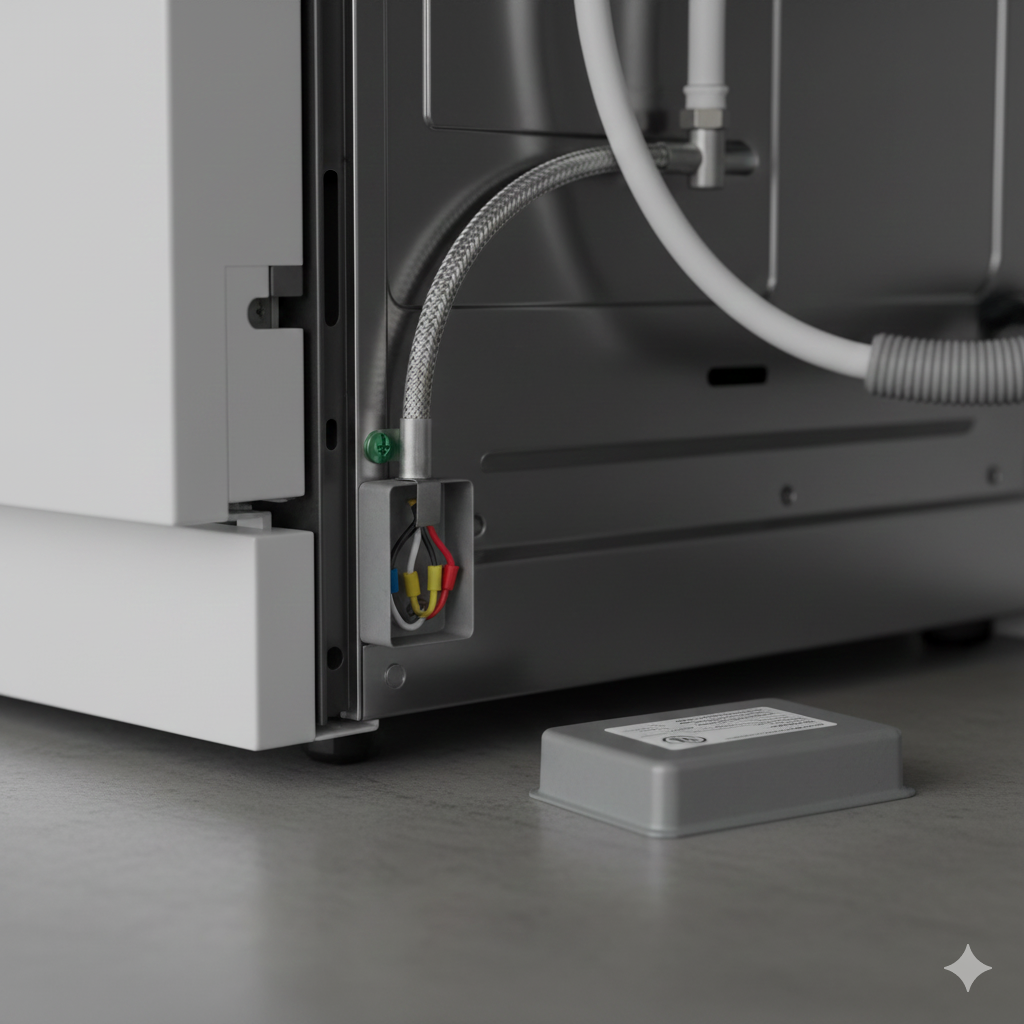
Installing a dishwasher involves more than simply connecting water lines and sliding the unit into place. The electrical connection is a critical component that must meet specific code requirements to ensure safety, reliability, and proper operation. Understanding these electrical requirements is essential whether you're installing a new dishwasher, replacing an existing unit, or upgrading your kitchen electrical system.
The National Electrical Code (NEC) establishes minimum safety standards for dishwasher installations, and local building codes in Reno and throughout Nevada enforce these requirements. Proper electrical installation protects your home from electrical hazards, ensures your dishwasher operates efficiently, maintains manufacturer warranties, and prevents costly repairs or dangerous failures. This comprehensive guide explains everything you need to know about dishwasher electrical requirements.
Standard Electrical Requirements for Dishwashers
Modern dishwashers have specific electrical needs that must be met for safe and proper operation. Understanding these fundamental requirements is the first step in ensuring a compliant installation.
Dedicated Circuit Requirement
The NEC requires that dishwashers be connected to a dedicated circuit - meaning the circuit serves only the dishwasher and no other appliances or outlets. This requirement exists because dishwashers draw significant power during their heating cycles, and sharing a circuit with other kitchen appliances could overload the circuit.
A dedicated circuit ensures that when your dishwasher's heating element activates to heat water or during the drying cycle, the full circuit capacity is available. This prevents nuisance breaker tripping and ensures the dishwasher receives consistent power throughout its operating cycle. Sharing a circuit with other appliances like garbage disposals, refrigerators, or counter receptacles violates code and creates both operational problems and safety hazards.
The dedicated circuit requirement also provides safety benefits. If a problem develops with the dishwasher, only that appliance is affected when the breaker trips. This isolation makes troubleshooting easier and prevents a dishwasher malfunction from affecting other critical kitchen appliances.
Voltage Requirements: 120V Standard
Residential dishwashers in the United States operate on 120 volts, connecting to standard household electrical systems. Unlike electric ranges, dryers, or water heaters that require 240-volt circuits, dishwashers use the same voltage as most household appliances and outlets.
This 120-volt requirement means the dishwasher connects to a single-pole circuit breaker in your electrical panel, using two wires (hot and neutral) plus a ground wire. The electrical panel's 120-volt circuits are the same ones that power most of your home's lighting and standard outlets, making dishwasher circuit installation relatively straightforward compared to major 240-volt appliances.
However, even though dishwashers use standard 120-volt power, they draw considerably more current than typical household devices, which is why they require their own dedicated circuit rather than simply plugging into an existing kitchen outlet.
Amperage and Circuit Breaker Size
Most residential dishwashers are designed to operate on either a 15-amp or 20-amp circuit, with 20-amp circuits being more common and recommended. The circuit breaker size must match both the wire gauge used and the dishwasher's power requirements as specified by the manufacturer.
Typical dishwashers draw between 10 and 15 amps during peak operation, particularly when the heating element is active. A 15-amp circuit provides adequate capacity for dishwashers with lower power requirements, but many modern dishwashers with enhanced drying systems and higher-temperature wash options require the additional capacity of a 20-amp circuit.
When determining the appropriate circuit size, electricians follow the NEC guideline that the continuous load on a circuit should not exceed 80% of the circuit rating. Since dishwasher wash cycles can run for extended periods, a dishwasher drawing 12 amps should ideally be on a 20-amp circuit (12 amps is 80% of 15 amps, right at the limit), providing adequate safety margin and preventing breaker nuisance tripping.
Always consult the dishwasher's installation manual or specification plate for the manufacturer's circuit requirements. Installing the dishwasher on an undersized circuit can cause operational problems, void the warranty, and create safety hazards.
Wire Gauge Requirements
The wire gauge (thickness) must be appropriate for the circuit amperage and the length of the wire run from the electrical panel to the dishwasher location. Undersized wire creates excessive resistance, leading to voltage drop, heat buildup, and fire hazard.
For 15-amp dishwasher circuits, 14-AWG copper wire is the minimum acceptable size, though many electricians prefer to use 12-AWG for all dishwasher circuits regardless of amperage. For 20-amp circuits, 12-AWG copper wire is required by code - you cannot use 14-AWG wire on a 20-amp circuit.
The wire installation must include three conductors: a hot wire (typically black), a neutral wire (white), and a ground wire (bare copper or green). Older installations may have been allowed to use the neutral wire for grounding purposes, but modern code requires a separate ground conductor. If you're replacing a dishwasher in a home with older wiring that lacks a separate ground, the circuit should be upgraded to meet current code.
Professional electricians also consider voltage drop when sizing wires, particularly for longer circuit runs. If the distance from the electrical panel to the dishwasher exceeds 50-75 feet, larger wire gauge may be necessary to maintain proper voltage at the appliance. Voltage drop can cause the dishwasher to underperform, particularly affecting heating elements and motor operation.
National Electrical Code (NEC) Requirements
The NEC establishes comprehensive safety standards for all electrical installations, including specific provisions for dishwashers and kitchen appliances. Understanding these requirements ensures code-compliant installation and maximum safety.
NEC Article 422: Appliances
NEC Article 422 covers general requirements for appliances, including dishwashers. Key provisions include requirements for disconnecting means, overcurrent protection, and installation specifications. These standards ensure that appliances can be safely serviced and that electrical protection is properly implemented.
Article 422.16 requires that dishwashers have a means of disconnect within sight of the appliance or capable of being locked in the open position. This requirement ensures that anyone servicing the dishwasher can disconnect power and verify that it remains disconnected throughout the service work. The circuit breaker in the electrical panel typically serves as this disconnect means, provided the panel is accessible and can be locked out during service.
The article also specifies that branch circuit conductors and overcurrent protection must be sized according to the appliance load. For dishwashers, this means the wire and breaker must handle the appliance's rated current plus appropriate safety margins.
GFCI Protection Requirements
One of the most significant recent changes to dishwasher electrical requirements is the mandatory GFCI (Ground Fault Circuit Interrupter) protection. The 2014 NEC introduced the requirement that dishwashers have GFCI protection, and this has been retained and reinforced in subsequent code cycles including the current 2023 NEC.
GFCI protection detects ground faults - situations where electrical current is flowing through an unintended path, such as through water or through a person. When a ground fault is detected, the GFCI interrupts power within milliseconds, preventing electrical shock. Given that dishwashers use water and are often serviced while wet, GFCI protection provides critical safety.
GFCI protection for dishwashers can be provided in several ways. The most common method is installing a GFCI circuit breaker in the electrical panel on the circuit serving the dishwasher. This protects the entire circuit from the panel to the appliance. Alternatively, if the dishwasher uses a plug-and-receptacle connection (rather than hardwired), a GFCI receptacle can be installed at the outlet location.
Some confusion exists about GFCI requirements for dishwashers because the requirement is relatively recent, and many existing dishwashers were installed before this requirement took effect. When replacing a dishwasher, code does not always require upgrading to GFCI protection if one is not already present, though it is highly recommended. However, for new installations or significant kitchen remodels, GFCI protection is mandatory.
It's important to note that GFCI devices can occasionally trip due to the normal operation of appliances with motors and heating elements. While this can be an inconvenience, it's preferable to the alternative of potential electrical shock. If GFCI trips become frequent, this indicates a problem with either the dishwasher or the electrical installation that should be professionally evaluated.
Junction Box Location and Accessibility
For hardwired dishwasher installations, NEC requires an accessible junction box where the dishwasher's wiring connects to the house wiring. This junction box must be accessible for inspection, maintenance, and repair without requiring removal of the dishwasher or extensive demolition.
The typical location for a dishwasher junction box is in the cabinet next to the dishwasher space, usually in the sink base cabinet. This location allows the dishwasher to be removed for service while the junction box remains accessible. Some installations place the junction box in the basement or crawl space directly below the dishwasher location, which is also acceptable provided it remains accessible.
Junction boxes must be sized appropriately for the number and size of conductors they contain. A standard 4-inch square box with appropriate depth is typically used for dishwasher connections. The junction box must have a removable cover secured with screws (not just a snap-on cover), and this cover must remain accessible after installation is complete.
Burying junction boxes behind walls, above ceilings, or in locations that require removal of the dishwasher to access violates NEC requirements. Junction box accessibility is strictly enforced because future service work or troubleshooting may require access to these connection points. Inaccessible junction boxes can lead to dangerous work-arounds where electricians make new connections rather than using the existing proper junction box.
Cabinet Space Requirements
While not strictly an electrical code requirement, NEC installation standards interact with dishwasher cabinet space requirements. The dishwasher must fit in its designated space without compressing or damaging electrical cables. Sharp cabinet edges, metal channels, and mounting brackets must not contact electrical wiring.
Electrical cables entering the dishwasher space must be protected from physical damage. This typically means using cable clamps at the junction box and ensuring cables are secured and routed to avoid contact with the dishwasher during installation or removal. Some jurisdictions require flexible metal conduit (commonly called "flex" or "Greenfield") for the final connection from the junction box to the dishwasher to provide additional physical protection.
Hardwired vs. Plug-In Dishwasher Installations
Dishwashers can be connected to electrical power using two different methods: hardwired or plug-and-receptacle. Each method has distinct advantages, disadvantages, and code requirements.
Hardwired Installation
Hardwired installation means the dishwasher's electrical cable connects directly to the house wiring through a junction box, with no plug or receptacle involved. This is the traditional installation method and remains the most common approach, particularly for built-in dishwashers.
Advantages of hardwired installation:
- More secure connection: Eliminates the possibility of the dishwasher becoming unplugged accidentally
- Cleaner appearance: No visible plug or cord
- Space efficiency: Doesn't require outlet space in adjacent cabinets
- Reduced connection points: Fewer potential points of failure in the electrical system
- Lower cost: Eliminates the expense of the receptacle and plug
Disadvantages of hardwired installation:
- More difficult service access: Requires turning off the circuit breaker for any service work
- Replacement complexity: Replacing the dishwasher requires electrical connection work
- No local disconnect: The circuit breaker serves as the disconnect, which may be inconvenient if the panel is far from the kitchen
Hardwired installations must use an accessible junction box as discussed earlier. The connection in the junction box typically uses wire nuts to join the house wiring to the dishwasher's supply cable. This junction must be mechanically secure and properly sized to prevent overheating.
Plug-and-Receptacle Installation
Plug-and-receptacle installations provide electrical power through a dedicated outlet, typically located in the cabinet adjacent to the dishwasher. The dishwasher includes a power cord with a plug that connects to this receptacle.
Advantages of plug-and-receptacle installation:
- Easy disconnect: Simply unplug the dishwasher for service or replacement
- Simplified replacement: New dishwasher installation doesn't require an electrician
- Flexibility: Easier to temporarily remove and reinstall the dishwasher
- Clear disconnect point: Obvious visual confirmation that power is disconnected
Disadvantages of plug-and-receptacle installation:
- Requires cabinet space: The receptacle must be installed in an adjacent cabinet, using up storage space
- Can become unplugged: Movement during service could accidentally disconnect power
- Higher cost: Requires purchase of receptacle and installation materials
- Potential water exposure: Receptacle in sink cabinet could be exposed to plumbing leaks
If using a plug-and-receptacle connection, the receptacle must be GFCI protected and located in an adjacent cabinet space (typically the sink base cabinet). The receptacle should not be located in the dishwasher space itself, as this would require removing the dishwasher to access the receptacle, defeating the purpose of having a plug-and-receptacle connection.
Which Method is Better?
Both hardwired and plug-and-receptacle installations are code-compliant when properly executed. The choice often comes down to installer preference, local customs, and specific installation circumstances.
Hardwired installations are generally preferred by professional electricians for permanent installations in new construction or major remodels. This method provides the most secure connection and eliminates potential issues with receptacles in wet cabinet spaces.
Plug-and-receptacle installations may be preferred in situations where frequent dishwasher replacement is anticipated, in rental properties where appliances are swapped regularly, or when cabinet space for a receptacle is readily available. This method also appeals to homeowners who prefer the convenience of a visible, easy-to-access disconnect point.
Regardless of which method is chosen, the critical factors are proper wire sizing, correct circuit protection, GFCI protection, and compliance with all applicable code requirements.
Common Dishwasher Installation Mistakes
Understanding common errors in dishwasher electrical installation helps homeowners recognize potential problems and emphasizes why professional installation is important. These mistakes can create safety hazards, code violations, and operational problems.
Using a Shared Circuit Instead of Dedicated
One of the most common code violations in dishwasher installations is connecting the dishwasher to a circuit shared with other appliances or outlets. This often happens when homeowners or inexperienced installers simply tap into an existing kitchen outlet circuit rather than running a dedicated circuit from the electrical panel.
A dishwasher on a shared circuit will frequently trip the breaker when operating simultaneously with other appliances. For example, if the dishwasher shares a circuit with kitchen counter outlets, running a coffee maker or toaster while the dishwasher is in its heating cycle may overload the circuit. This creates inconvenience and may lead homeowners to mistakenly believe the dishwasher or breaker is defective.
More seriously, operating a dishwasher on an overloaded shared circuit creates a fire hazard. The circuit wiring may carry current beyond its rated capacity, generating excess heat. While the circuit breaker should trip to prevent this, breakers can fail or may not trip until current substantially exceeds the rating. Continuous operation at or near circuit capacity also degrades wire insulation over time.
Undersized Circuit Breaker or Wiring
Installing a dishwasher that draws 15 amps on a 15-amp circuit leaves no safety margin and may cause nuisance tripping. Using 14-gauge wire with a 20-amp breaker is even more dangerous, as the breaker may not trip before the wire overheats.
The circuit components must be sized as a matched system: the wire gauge must support the breaker amperage, and the breaker must be appropriate for the load. A 20-amp circuit requires 12-gauge wire minimum. A 15-amp circuit can use 14-gauge wire but should not be used for dishwashers that may draw close to or exceed 12 amps continuous.
Undersized circuits may appear to work initially but cause problems over time. The dishwasher may trip the breaker during heating cycles, or may run but not heat water properly due to voltage drop in undersized wiring. These operational problems often lead to misdiagnosis of dishwasher defects when the real problem is inadequate electrical supply.
Missing or Improperly Located GFCI Protection
Many existing dishwashers were installed before GFCI protection became required, and some new installations incorrectly omit this critical safety feature. GFCI protection is now required by code for all new dishwasher installations and is highly recommended even for simple replacement installations where it's not strictly required.
Some installers incorrectly believe that GFCI protection is unnecessary for hardwired appliances or that the dishwasher's built-in grounding provides adequate protection. This is false - GFCI protection detects ground faults that grounding alone cannot prevent, particularly faults that could cause electrical shock through water contact.
When GFCI protection is installed incorrectly - such as protecting only the receptacle but not the entire circuit, or using GFCI devices not rated for the appliance current - it may fail to provide protection or may cause nuisance tripping. GFCI breakers must be properly installed in the electrical panel with neutral connections correctly configured to function properly.
Inaccessible or Missing Junction Box
Hardwired dishwashers sometimes have junction boxes installed in locations that become inaccessible once the dishwasher is installed. Common mistakes include mounting the junction box behind the dishwasher where it can only be accessed by removing the appliance, or placing it above the cabinet where it becomes covered by countertops.
Some installations omit the junction box entirely, with wires simply spliced together behind the dishwasher or in the wall. This violates code and creates serious safety hazards. All wire splices must be contained in approved junction boxes that remain accessible.
The junction box requirement exists because future service, troubleshooting, or circuit modifications may require access to the connection point. Inaccessible junction boxes often lead to dangerous work-arounds where new connections are made rather than properly accessing existing ones.
Improper Wire Types or Connections
Using extension cords or improper wire types for dishwasher connections is surprisingly common among DIY installations. Standard household extension cords are never appropriate for permanent appliance connections. Dishwashers must be connected with proper building wire (Romex or individual THHN conductors in conduit) rated for the installation environment.
Wire connections in junction boxes must use appropriate wire nuts or other approved connectors properly sized for the wire gauge and number of conductors. Twisted wires without wire nuts, tape used instead of wire nuts, or improperly sized connectors create high-resistance connections that overheat and fail.
The dishwasher's factory-installed cable must also be properly secured where it enters the appliance. Many dishwashers include a cable clamp or connector that must be tightened to prevent the cable from being pulled out of the appliance. Failure to properly secure this connection can result in wires pulling loose, creating short circuits or shock hazards.
No Strain Relief or Cable Protection
Electrical cables must be protected from physical damage throughout their run. This means proper cable stapling, protection from sharp edges, and appropriate strain relief where cables enter boxes or appliances. Cables lying loose in cabinets or pulled tight without slack create opportunities for damage.
When pulling dishwashers in and out for service, unprotected cables can be crushed, cut on metal cabinet parts, or stretched to the point of conductor damage. Proper installation includes securing cables away from the dishwasher path, providing appropriate slack for dishwasher removal, and using cable clamps or flex conduit where necessary.
Upgrading Older Dishwasher Circuits
Many Reno-area homes built before 2000 have dishwasher electrical installations that don't meet current code requirements. While existing installations may be grandfathered and not require immediate upgrading, there are compelling reasons to consider electrical upgrades when replacing a dishwasher or renovating a kitchen.
When Upgrades Are Required
Electrical upgrades become mandatory in several situations. If you're performing a kitchen remodel that includes work requiring electrical permits, the entire kitchen electrical system typically must be brought up to current code. This means adding GFCI protection, ensuring dedicated circuits for all required appliances, and correcting any deficient installations.
When replacing a dishwasher, if the existing circuit doesn't provide adequate capacity for the new appliance, the circuit must be upgraded. Modern dishwashers often have higher power requirements than older models, particularly those with enhanced drying systems or sanitizing features. Installing a higher-power dishwasher on an inadequate circuit violates code and voids the appliance warranty.
If the existing installation has safety deficiencies - such as aluminum wiring connections not properly made, missing ground conductors, or damaged wiring - these must be corrected before a new dishwasher is installed. Licensed electricians will not connect new appliances to unsafe or deficient electrical systems.
Common Upgrades for Older Installations
The most common upgrade needed for older dishwasher circuits is adding GFCI protection. This can often be accomplished by replacing the standard circuit breaker with a GFCI breaker in the electrical panel. The cost is relatively modest and provides significant safety benefits.
Older installations may lack a separate ground conductor, instead using the neutral wire for grounding purposes. Current code requires a separate ground wire. Upgrading this requires running new cable from the electrical panel to the dishwasher location, which can be expensive but is necessary for safety and code compliance in new or remodeled installations.
Homes with undersized electrical services may need panel upgrades to accommodate additional dedicated circuits. If your electrical panel is full or if adding a dishwasher circuit would exceed the panel's main breaker rating, a service upgrade may be necessary. This is particularly common in older homes with 60-amp or 100-amp service, which may not provide adequate capacity for modern appliance loads.
Some older homes have dishwashers on 15-amp circuits that struggle to support modern appliances. Upgrading to a 20-amp circuit provides better performance and prevents nuisance tripping. This requires replacing the circuit breaker and may require replacing the wiring if the existing wire is 14-gauge.
Cost Considerations
Electrical upgrades range significantly in cost depending on the scope of work required. Adding a GFCI breaker to an existing circuit might cost $150-300 in labor and materials. Running a completely new dedicated circuit from the panel to the kitchen typically costs $300-800 depending on distance and installation difficulty.
More extensive upgrades like electrical panel replacement can cost $1,500-4,000 or more depending on panel size and installation complexity. While these costs may seem substantial, they represent investments in safety, code compliance, and proper appliance operation that provide value for decades.
When evaluating upgrade costs, consider the full context. Electrical work done during kitchen remodeling is much less expensive than the same work performed later, as walls are already open and access is readily available. Similarly, upgrading electrical systems when replacing a dishwasher is more economical than scheduling separate service calls for electrical upgrades and appliance installation.
Why Professional Installation Matters
While some homeowners may be tempted to install dishwashers themselves to save money, professional electrical installation provides critical benefits that far outweigh the cost savings of DIY work.
Safety and Code Compliance
Licensed electricians understand current NEC requirements and local code provisions specific to Nevada and your jurisdiction. They know how to properly size circuits, install GFCI protection, locate junction boxes, and make secure connections. This knowledge prevents installations that may appear to work but contain hidden hazards.
Professional installation ensures all work meets code requirements, which is essential for several reasons. Code-compliant work protects your family from electrical hazards including shock and fire. It ensures your homeowner's insurance remains valid - some policies specifically exclude coverage for damage resulting from unpermitted or non-compliant electrical work. Code compliance also prevents problems when selling your home, as home inspections will identify deficient electrical work that must be corrected.
Electricians carry liability insurance that protects you if something goes wrong. If a professional installation causes damage or injury, their insurance provides recourse. DIY work offers no such protection, and homeowner's insurance typically doesn't cover damage resulting from the homeowner's own faulty work.
Proper Tools and Equipment
Professional electrical work requires specialized tools including voltage testers, wire strippers, cable installation tools, and diagnostic equipment. Licensed electricians have invested in proper tools and know how to use them correctly. Attempting electrical work with improper tools increases the difficulty and danger of the work.
Electricians also have access to professional-grade materials and know which products are reliable and code-compliant. They understand that not all electrical products are equal and avoid the cheap components that may be available at some retail outlets but lack proper testing and certification.
Warranty Protection
Many dishwasher manufacturers require professional installation to maintain warranty coverage. If a dishwasher fails and the manufacturer determines it was improperly installed, they may void the warranty. Professional installation typically includes documentation that the work was performed correctly, protecting your warranty rights.
Additionally, some homeowner's insurance policies require that certain types of electrical work be performed by licensed professionals. Failure to use licensed electricians could void your coverage for electrical-related claims.
Troubleshooting and Problem-Solving
Professional electricians bring experience and problem-solving skills to every installation. They can identify potential issues before they become problems, such as recognizing that existing wiring is inadequate, identifying safety hazards in the electrical panel, or determining that other kitchen circuits need attention.
When unexpected complications arise during installation - such as discovering aluminum wiring, finding a full electrical panel, or encountering damaged circuits - experienced electricians know how to address these issues correctly and safely. DIY installers may not recognize problems or may attempt unsafe workarounds.
Permits and Inspections
Significant electrical work requires permits and inspections by local building departments. Licensed electrical contractors know which work requires permits, handle the permitting process, and ensure work passes inspection. This documentation becomes part of the permanent record for your property and provides important protection when selling your home.
DIY electrical work that requires permits but is performed without them creates several problems. The work is technically illegal, you may face fines if discovered, your insurance may not cover electrical issues, and you'll need to have the work redone to code when selling the property. The cost of correcting unpermitted work often exceeds what professional installation would have cost initially.
Signs of Electrical Problems with Existing Dishwashers
Even dishwashers that were properly installed can develop electrical problems over time. Recognizing these warning signs allows you to address issues before they become serious hazards or cause dishwasher failure.
Frequent Circuit Breaker Tripping
If your dishwasher's circuit breaker trips regularly, this indicates a problem that requires professional attention. Occasional tripping during initial startup of a new dishwasher may be normal as GFCI breakers can be sensitive to motor startup currents, but consistent tripping indicates issues such as circuit overload, deteriorating wiring connections, ground faults in the dishwasher or wiring, or a failing circuit breaker.
Never respond to frequent tripping by installing a larger breaker. This disables your protection system and creates serious fire hazards. The solution is identifying and correcting the underlying problem.
Dishwasher Not Heating Properly
If your dishwasher runs but doesn't heat water effectively or fails to dry dishes, electrical problems may be the cause. While this could indicate a failed heating element in the dishwasher, it can also result from inadequate voltage reaching the appliance due to undersized circuits, poor connections creating voltage drop, or loose wiring connections creating resistance.
Heating elements are high-power components that require the full circuit voltage to operate properly. Even moderate voltage drop can prevent the heating element from reaching proper temperature. Professional diagnosis can determine whether the problem is the appliance or the electrical supply.
Burning Smell or Discoloration
Any burning smell from or near your dishwasher requires immediate attention. Turn off the circuit breaker and contact an electrician immediately. Burning smells indicate overheating connections, failing wire insulation, or short circuits - all of which present fire hazards.
Discoloration or heat marks on the electrical panel breaker, on outlets near the dishwasher, or on the junction box also indicate dangerous overheating. These signs should never be ignored.
Electrical Shocks or Tingling
If you feel electrical shock or tingling when touching the dishwasher, immediately turn off power to the circuit and contact an electrician. This indicates a ground fault where electrical current is energizing the metal chassis of the dishwasher. This is extremely dangerous and can be fatal.
Even mild tingling sensations represent serious hazards. Ground faults can worsen suddenly, and what feels like a minor tingle today could become a lethal shock tomorrow. GFCI protection should prevent this hazard, but if you experience shock, the GFCI is not functioning properly or is not installed.
Dishwasher Operation Affecting Other Circuits
If lights dim significantly when your dishwasher starts, or if you notice other electrical anomalies coinciding with dishwasher operation, this suggests electrical system problems. Possible causes include shared neutral connections between circuits, undersized electrical service, or poor main panel connections.
While modern dishwashers can cause slight dimming during motor startup, significant or sustained dimming indicates problems requiring professional evaluation. These symptoms often indicate issues beyond just the dishwasher circuit and may require broader electrical system work.
Age-Related Deterioration
Even properly installed dishwasher circuits deteriorate over time. Wire connections can loosen due to thermal cycling (repeated heating and cooling), junction box connections may corrode, and circuit breakers can weaken or fail. Dishwashers and electrical circuits over 15-20 years old should be professionally inspected even if no obvious problems exist.
Preventive inspection and maintenance costs far less than repairing damage from electrical failures and can identify potential problems before they cause hazards or expensive damage.
Protecting Your Reno-Area Home
At Hay & Wilson Electric, we provide comprehensive dishwasher electrical installation services throughout the Reno, Sparks, and Northern Nevada region. Our licensed electricians understand both NEC requirements and local code provisions specific to Nevada jurisdictions. We ensure every dishwasher installation meets or exceeds all safety and performance standards.
Whether you're installing a dishwasher in new construction, replacing an existing unit, or upgrading your kitchen electrical system, we provide expert service including circuit installation and upgrades, GFCI protection installation, junction box installation and location, proper wire sizing and routing, electrical panel work when needed, code compliance verification, and permit handling and inspections.
We also provide diagnostic services for existing dishwashers experiencing electrical problems, comprehensive electrical inspections for homes of any age, and kitchen electrical upgrades to support modern appliances and usage patterns.
Our commitment to quality work means we never take shortcuts. We use proper materials, follow manufacturer specifications, ensure code compliance, and provide clear documentation of all work performed. This attention to detail protects your home, maintains appliance warranties, and provides the reliable performance you expect from your dishwasher.
Conclusion: Ensuring Safe and Reliable Dishwasher Operation
Proper dishwasher electrical installation is essential for safety, performance, and code compliance. The requirements - dedicated 120-volt circuits, appropriate wire sizing, GFCI protection, accessible junction boxes, and proper connection methods - exist to protect your home and family from electrical hazards while ensuring your dishwasher operates reliably.
Understanding the difference between hardwired and plug-in installations, recognizing common installation mistakes, and knowing when electrical upgrades are necessary helps homeowners make informed decisions about dishwasher installation and maintenance. While these systems may seem straightforward, the technical requirements and safety implications make professional installation the right choice.
Licensed electricians bring expertise, proper tools, code knowledge, and problem-solving skills that ensure installations are done correctly the first time. The cost of professional installation is modest compared to the risks of improper DIY work, and the investment provides decades of safe, reliable dishwasher operation.
If you're installing a new dishwasher, replacing an existing unit, or experiencing electrical problems with your current dishwasher, professional electrical service is the safe and smart choice. Don't compromise on electrical safety - contact a licensed electrician to ensure your dishwasher installation meets all requirements and provides reliable performance for years to come.